True physical transformation relies on more than just hard work; it requires a deep understanding of human physiology, biomechanics, and structured programming. Whether you are stepping into the gym for the first time, rehabilitating a nagging ache, or trying to shatter a plateau, this hub strips away gym myths and replaces them with scientific principles. By understanding the mechanics of how your body moves and adapts, you can train smarter, prevent injury, and guarantee long-term progress. Explore our foundational pillars below to build a stronger, more resilient body.
You can determine the intended audience for the following articles by their thumbnail style. Illustrated anime characters respresent beginner friendly highly practical advice. Thumbnails that are more matte/abstract represent articles that are more scientific or a more academic deep dive.
The initial phase of any fitness journey is governed by a rapid period of neurological and physiological adaptation. When you first begin lifting weights or exercising, the initial improvements in strength are largely driven by your central nervous system (CNS) learning how to efficiently recruit motor units, rather than an immediate increase in muscle mass. Because the body is highly sensitive to a new stimulus, beginners do not need complex, high-volume routines to trigger muscle protein synthesis. In fact, mimicking the advanced body-part splits used by elite bodybuilders often leads to excessive muscle damage, severe delayed onset muscle soreness (DOMS), and burnout.
Instead, a successful beginner phase requires mastering movement patterns through full-body training, establishing a reliable baseline for progress, and learning how to accurately gauge internal effort. Understanding concepts like the Rate of Perceived Exertion (RPE) and Reps in Reserve (RIR) allows new lifters to apply the exact amount of stress needed to force adaptation without overtraining. By laying a scientifically sound foundation, you establish the motor control and habits necessary for decades of pain-free lifting.
The following articles are designed to eliminate the guesswork and help you build a sustainable, scientifically backed foundation:

Nervous about your first gym visit? This comprehensive guide eliminates the guesswork with a simple, structured workout plan you can follow from day one. Learn what to expect, where to go, and exactly what to do to build lasting confidence and consistency in your fitness routine.
Expand Description
New to exercise and unsure how hard you should be working out? "Measuring Exercise Intensity for Beginners" breaks down four simple, practical methods that help you train at the right effort level for consistent progress. Learn to use Rate of Perceived Exertion (RPE) to gauge your internal effort, master the Talk Test for cardiovascular training, understand heart rate zones for objective data, and discover Reps in Reserve (RIR) for strength training. This guide shows you why tracking intensity matters for progressive overload, how to spot overtraining patterns, and how to replace guesswork with actionable data. Perfect for beginners who want to build sustainable fitness habits without getting overwhelmed by complex terminology.
Expand Description
Most people start exercising to feel better, lose a little weight, or boost their energy—but how do you know if it’s actually working? Even if you’re not chasing personal records, regularly assessing your fitness can provide motivation, clarity, and encouragement when progress feels slow. Think of it like checking a map on a long road trip—you might be moving, but tracking lets you see how far you’ve come. In this article, we’ll walk you through simple ways to measure your progress in key areas of fitness—without fancy equipment or complicated tests.
Expand Description
If you're just starting resistance training, it's easy to fall into the trap of copying influencer routines or your gym buddy's advanced split. However, jumping into high-volume, body-part-focused programs too soon can leave you sore, frustrated, and at risk for injury. Beginners need a smarter, more sustainable approach—one that builds strength and confidence without burning out. This post breaks down why full-body training is a better starting point and how to gradually progress for long-term results.
Expand DescriptionUnderstanding biomechanics is the definitive line between stimulating targeted muscle growth and causing chronic joint degradation. In exercise science, proper technique is not simply about making a movement look aesthetically pleasing; it is about optimizing lever systems, manipulating joint angles, and ensuring that the target muscle group experiences the highest possible degree of mechanical tension. Many traditional gym cues fail because they ignore individual anthropometry—the unique bone lengths and joint structures of each lifter.
For example, a lifter with long femurs will naturally require more forward torso lean and forward knee travel during a squat compared to someone with shorter femurs. Forcing both lifters to follow identical visual cues (like keeping the knees strictly behind the toes) can lead to unequal force distribution across the lumbar spine and patellar tendons. By applying the laws of physics to human movement, we can systematically eliminate the movement compensations that lead to lower back aches and joint pain. Furthermore, mastering full range of motion—especially the stretched position of a muscle—has been shown to be one of the strongest drivers of hypertrophy.
The following deep dives explore these biomechanical principles, offering research-backed form corrections for your most important lifts:

Low back pain affects roughly 80% of adults, but much of everyday back discomfort stems from weak core muscles and glutes that simply aren't pulling their weight. This beginner-friendly guide focuses on muscular causes of back pain and teaches you simple, research-backed exercises you can do at home without any equipment. Learn the McGill Three for building core stability with several simple glute exercises that help correct alignment issues and build the support system your spine needs. With consistent practice of these accessible movements, you can finally ditch that persistent ache and move more comfortably.
Expand Description
This article takes a deep dive into the origins of this common gym cue and dismantles the myth using up-to-date biomechanical research. You’ll learn when forward knee travel is actually beneficial—and when it’s not—along with how bar position, limb proportions, and mobility affect safe squat mechanics. Plus, try out our interactive simulation to discover how your body type impacts your ideal squat form. Whether you're a coach or just love to lift, this read will change how you think about squatting forever.
Expand Description
Want to maximize your gym results? Understanding when your muscles are truly about to give out is crucial for building strength and muscle. New research tested 34 lifters and found that most people significantly underestimate their capacity—especially with lighter weights. The good news? You can train your brain to be more accurate. This study-backed guide explains how to better judge your effort, push yourself appropriately, and implement proper safety precautions when training close to failure.
Expand Description
A 2024 study by renowned researcher Brad Schoenfeld reveals building muscle is more flexible than you think. The key findings? Focus on full range of motion (especially in stretched positions) and control your reps at 2-8 seconds. Don't stress about perfect form—most small technique details don't significantly impact muscle growth. Read the beginner-friendly breakdown of what really matters.
Expand DescriptionOnce you have established basic motor control and movement proficiency, the body requires an increasingly sophisticated stimulus to continue adapting. This is where the science of programming and progressive overload becomes critical. Progress is not simply adding more weight to the bar indefinitely; it involves the strategic manipulation of training variables such as volume, intensity, frequency, and rest intervals. When a lifter hits a plateau, it is usually because their current training stress no longer exceeds their body's adapted threshold.
This principle of strategic adaptation applies across all populations and goals. For older adults, targeted resistance training is the most potent medical intervention available to combat sarcopenia (age-related muscle loss) and improve bone mineral density. For those seeking weight loss or cardiovascular health, understanding the metabolic realities of exercise is vital—frequent, manageable bouts of activity (like "exercise snacks") often yield better long-term physiological changes and mortality reduction than chasing exhaustive, high-calorie-burn workouts that spike hunger and fatigue. Proper programming ensures that every minute spent training yields a specific, measurable physiological outcome.
The following guides explore advanced programming variables, longevity training, and strategies for breaking through inevitable plateaus:
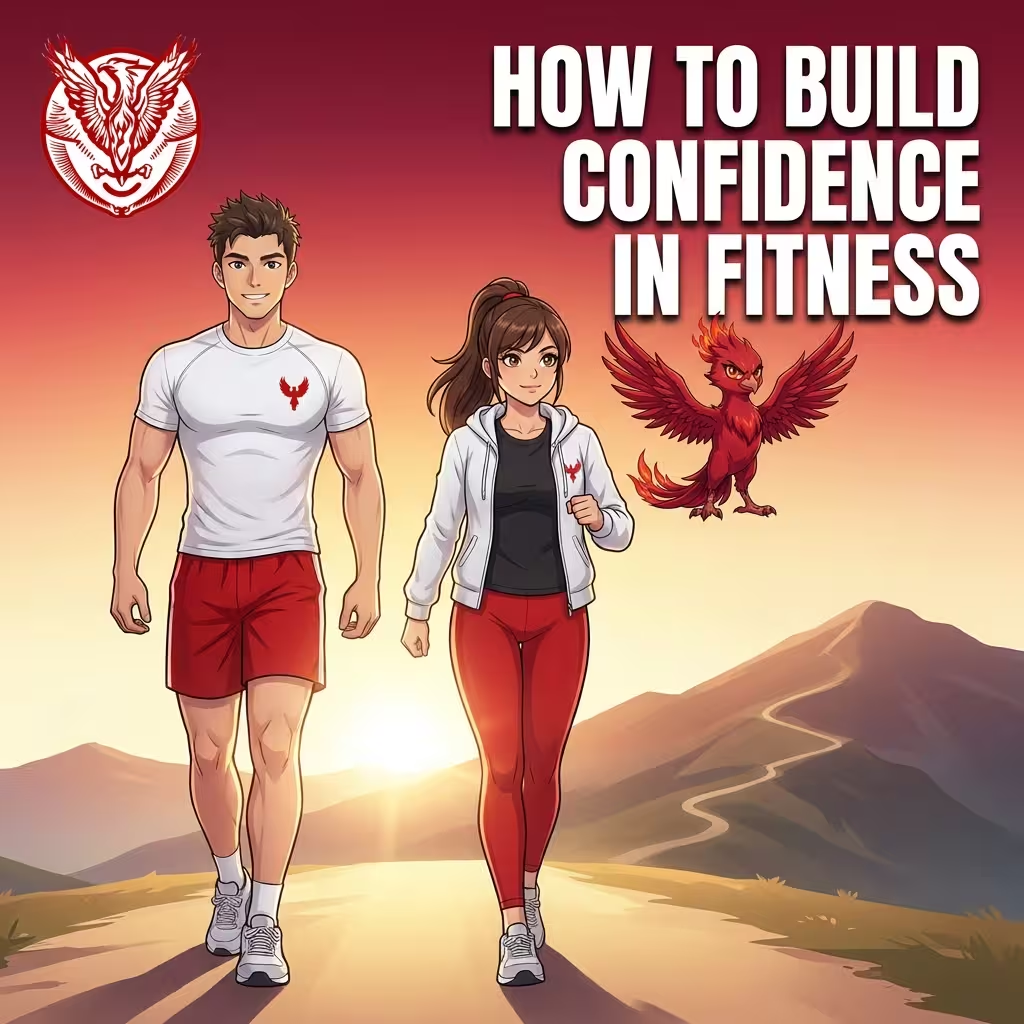
Self-efficacy, your belief in your ability to succeed, is one of the strongest predictors of whether you'll stick with healthy habits. This research-backed guide explains how to build fitness confidence through mastery experiences (your own small wins) and vicarious experiences (learning from others like you), with actionable strategies you can start today.
Expand Description
Hit a plateau in your training? Progressive overload might be the missing piece. Learn how to strategically increase training stress through methods beyond just adding weight, including volume adjustments, rest period manipulation, and exercise angle variations. Discover how to implement these strategies within a periodization framework for sustainable, long-term progress without burnout or injury.
Expand Description
The natural loss of muscle mass as we age, called sarcopenia, affects far more than just appearance—it impacts insulin resistance, fall risk, bone health, and even lifespan. This comprehensive guide explores why maintaining muscle mass is one of the most important health investments seniors can make and provides practical, evidence-based strategies to combat muscle loss effectively. You'll discover how decreased muscle tissue increases your risk of diabetes and dangerous falls, while learning why resistance training serves as the most powerful tool for building both muscle and bone density. The article includes beginner-friendly exercise recommendations adapted from ACSM guidelines, covering everything from resistance bands and bodyweight exercises to machine weights and free weights. We also address common nutritional deficiencies in older adults—including protein, vitamin D, and calcium—with practical, budget-friendly solutions to support muscle and bone health. Whether you're just starting your fitness journey or looking to optimize your current routine, this guide demonstrates how you can build strength, resilience, and independence at any age.
Expand Description
Stop falling for those eye-catching "burn 1000 calories" workout promises—they might actually be sabotaging your fitness goals. The fastest path to weight loss starts with creating a caloric deficit through food choices, not trying to burn off excess calories through extreme exercise that leaves you ravenous and likely to overeat. This guide reveals why building consistent, manageable exercise habits trumps sporadic intense sessions for lasting transformation. Learn when high-intensity workouts become valuable tools (hint: it's after you've mastered the basics) and how to match your approach to your experience level for maximum results.
Expand Description
Discover how 10-minute exercise snacks can transform your health without overwhelming your busy schedule. Learn simple AMRAP circuits perfect for beginners, complete with modifications and science-backed benefits for reducing mortality risk.
Expand Description
We all know that strength training is good for your health—but how strong do you actually need to be to see real benefits? Recent research links muscular strength with increased longevity, better bone health, and fewer injuries, but the answer isn’t about lifting the heaviest weight in the gym. Whether you’re just getting started or looking to set meaningful goals, knowing your strength baseline can help guide your progress. In this article, we break down what “strong enough” really means—and how to safely assess your strength at any level.
Expand Description


.png)