.png)
Explore practical fitness strategies and evidence-based nutrition guides at the Innova Vita Health and Wellness blog. Designed for all experience levels, our articles range from quick daily habits to comprehensive scientific deep dives. To accommodate your learning style, we provide Quick Reads for some of our longer articles, audio versions, and interactive wellness simulations on select articles. For public health and wellness industry content, head over to our Business Blog
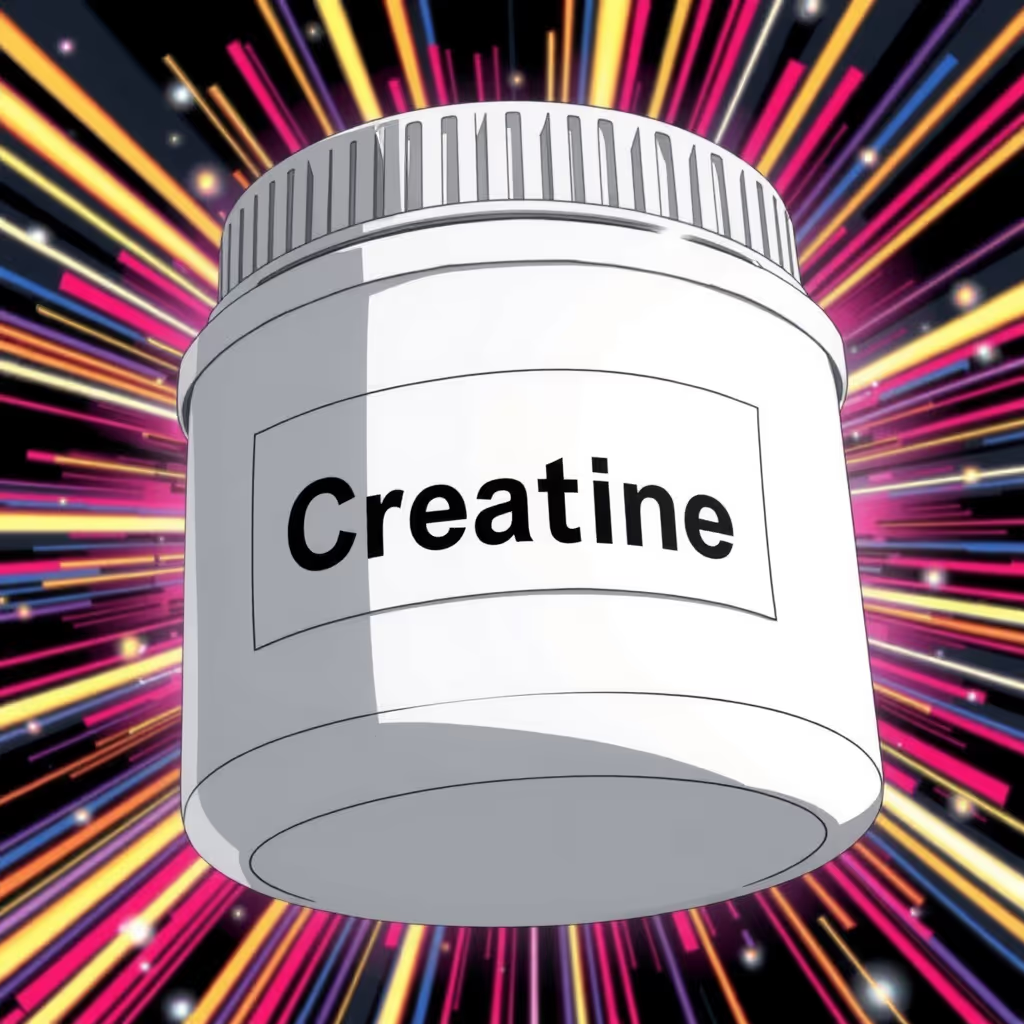
Creatine is often associated with gym-goers and muscle-building, but its benefits go far beyond athletic performance. Emerging research highlights its potential to support brain health, mood stability, metabolic function, and even recovery from neurological injury. Despite its wide-ranging effects and general safety, creatine isn't risk-free for everyone—especially those with certain medical conditions. This article breaks down who may benefit most, who should exercise caution, and why creatine monohydrate remains the gold standard in supplementation.
Click Here
Ever seen a fitness influencer claim, “I did this workout and lost 10 pounds”? That’s a textbook example of the post hoc ergo propter hoc fallacy—assuming that because one thing followed another, it must have caused it. In the world of fitness, results rarely boil down to a single variable like a workout plan. This article unpacks why correlation doesn’t equal causation and how understanding this fallacy can help you make more informed choices in your health journey.
Click Here
With fitness and nutrition content flooding social media, it’s easier than ever to access advice—but harder to know what’s trustworthy. One common trap is the Appeal to Authority fallacy, where someone’s credentials or popularity are used to validate a claim, even if they’re outside their expertise. In this article, we’ll break down how this fallacy shows up in wellness spaces and how to spot it. Learning to evaluate information critically can help you cut through the noise and make smarter decisions for your health.
Click Here
AI is revolutionizing how we approach health and fitness—offering personalized guidance, motivation, and strategies right at your fingertips. Whether you're trying to improve your diet, boost energy, or build better sleep habits, AI can help simplify the process and support long-term change. With the right prompts, these tools become powerful wellness coaches tailored to your goals. In this article, we explore how to use AI effectively—and responsibly—to take charge of your health journey.
Click Here
We all know that strength training is good for your health—but how strong do you actually need to be to see real benefits? Recent research links muscular strength with increased longevity, better bone health, and fewer injuries, but the answer isn’t about lifting the heaviest weight in the gym. Whether you’re just getting started or looking to set meaningful goals, knowing your strength baseline can help guide your progress. In this article, we break down what “strong enough” really means—and how to safely assess your strength at any level.
Click Here
Most people start exercising to feel better, lose a little weight, or boost their energy—but how do you know if it’s actually working? Even if you’re not chasing personal records, regularly assessing your fitness can provide motivation, clarity, and encouragement when progress feels slow. Think of it like checking a map on a long road trip—you might be moving, but tracking lets you see how far you’ve come. In this article, we’ll walk you through simple ways to measure your progress in key areas of fitness—without fancy equipment or complicated tests.
Click Here
If you're just starting resistance training, it's easy to fall into the trap of copying influencer routines or your gym buddy's advanced split. However, jumping into high-volume, body-part-focused programs too soon can leave you sore, frustrated, and at risk for injury. Beginners need a smarter, more sustainable approach—one that builds strength and confidence without burning out. This post breaks down why full-body training is a better starting point and how to gradually progress for long-term results.
Click Here